

Answer:
Rabies is dangerous because once symptoms appear, the chances of survival are close to zero. However, dying from rabies is 100% preventable, as long as treatment is sought as soon as possible.

Image credit: pranidchakan boonrom on pexels
History
Rabies has been around for thousands of years, based to historical records.
In the 1880’s, a 9-year-old boy named Joseph Meister contracted rabies. Knowing that certain death was in store for her son, his mother insisted that Louis Pasteur* administer his experimental rabies vaccine on her son. Even though Louis Pasteur was hesitant to give an experimental vaccine to a child, he did so on the mother’s insistence. Joseph Meister received multiple doses, survived, and later went on to work at the Pasteur Institute in France.
Exposure to rabies
Rabies is spread by the saliva of infected animals. Thus, animal bites, especially those that puncture the skin, can cause transmission. Being scratched by a rabid animal can also cause infection since those animals can lick their claws.
Today, people who show symptoms of rabies still have almost zero chance of survival. Luckily, rabies has a longer incubation period than some viruses, so the time it takes between exposure to the time that symptoms appear is typically 2 to 3 months. However, depending on circumstances, the incubation period can be days to one year.
This incubation period, during which the rabies virus travels slowly along the nerves to the brain, is when an infected person can get the rabies vaccine and survive the disease. To note, our immune system doesn’t detect the virus while it is traveling with neurons. As well, if a cell sounds the alarm, the virus has a special protein that intercepts and blocks the distress signal.
Once the virus reaches the brain, symptoms occur (see below). This is because the virus proliferates quickly in the brain, causing cerebral inflammation. The immune system wakes up and reacts, but it is too late because the virus is now protected by the blood-brain barrier and our antibodies are too big to pass that barrier.
It is highly recommended that a person exposed to rabies speak with their healthcare professional as soon as possible. There is always a pharmacist available during our extended hours and you are welcome to drop by.
Prevention is prudent
Both children and adults should be encouraged to:
- avoid strange and sick animals
- leave animals alone when they are eating
- not try to separate fighting animals
- keep pets on a leash when out in public. Supervise them so that they do not come into contact with wild animals.
- not leave a young child alone with a pet
- not try to touch wild animals
- not try to help injured animals or try to capture wild animals
As well, in Little Rock, every pet dog or cat four months or older must be vaccinated for rabies and licensed by the City of Little Rock (and wear their collar at all times).
Symptoms
Once symptoms start, rabies is relentless and unstoppable. It attacks the brain and nervous system and symptoms can include the following, in order of progression:
- Pain, burning, and numbness at the site of infection
- Tiredness, inability to sleep
- Irritability
- Sore throat, muscle spasms of the throat
- Chills
- Vomiting
- Headache
- Agitation
- Anxiety
- Disorientation
- Hallucinations
- Unusual behavior
- Hyperactivity
- Difficulty swallowing
- Excessive salivation
- Delirium
- Paralysis
- Coma
- Death
It is worth noting that in about 20% of rabies cases, in humans as in animals, the symptoms can be less dramatic and the disease can run a longer course. Paralytic rabies (vs the more dramatic furious rabies) causes the muscles to become paralyzed, starting from the wound site. The person slowly falls into a coma and eventually dies.
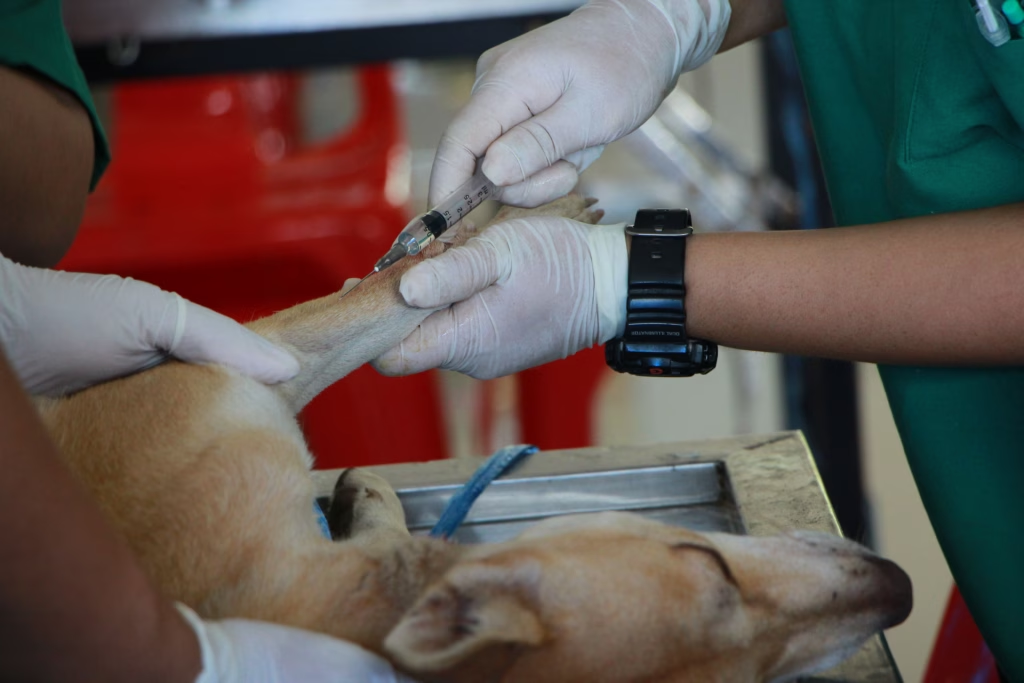
Image credit: pranidchakan boonrom on pexels
Rabies in animals
Generally, mammals can get rabies, although rabbits, squirrels, mice, and rats don’t generally carry rabies. Reptiles, amphibians, and fish are also not known to be infected with rabies.
Animals such as dogs, cats, and livestock can be infected (generally by wild animals) and spread rabies. Wild animals such as raccoons, skunks, foxes, coyotes, and bats can get rabies. To note, most of the recent human cases of rabies has been caused by bats. Their bites are small and sometimes difficult to locate on a person’s body.
Rabies vaccine and treatment
Your healthcare professional should review with you both the potential side effects and benefits of getting a rabies vaccine. It can cause symptoms such as sore arm, headache, and/or nausea and vomiting. In rare cases, it can cause a severe allergic reaction, although the current rabies vaccine has not caused death. The details of your specific situation will help determine whether you should get a rabies vaccine (and an antibody treatment or rabies immunoglobulin). Factors such as the animal you were exposed to, the type and time of exposure, your medications and health history, etc., all come into play.
If you or a loved one needs a rabies vaccine and need financial assistance you may apply at https://www.sanofipatientconnection.com/ and choose Arkansas. An application form will download and Sanofi takes about five business days to process it. You can also call Sanofi Patient Connection at (866) 801-5655. Sanofi is a pharmaceutical company.
People who get the rabies vaccine prior to getting rabies are those who have a high risk for exposure: veterinarians, animal handlers, travelers to certain parts of Asia, Africa, Central and South America, cave explorers (because of exposure to bats), etc. The general public usually gets the vaccine after having been exposed to the saliva of an infected animal.
Rare recovery from rabies without vaccination
In 2013, 15-year-old Jeanna Geise became the world’s first known survivor of rabies without receiving a vaccine, due to not being aware of having been bitten. Dr. Willoughby at the Children’s Hospital in Wisconsin and team tried on her what has become the Milwaukee Protocol. They induced coma, administered a variety of drugs, and she recovered to be released to rehabilitation where she had to re-learn how to talk, stand, walk, etc. Residual side effects included issues with running and balance, as well as speaking slowly.
Out of the 61 patients who received the Milwaukee Protocol, only 6 have survived, so it is not a definite cure, unlike the vaccine if given promptly and appropriately after exposure to the disease.
Care if exposed to rabies
Wash the wound carefully with soap and water. See your healthcare professional as soon as possible. Continue to watch for signs of infection. Keep the site clean, changing the dressing regularly.
Call animal services (Little Rock number is 501-371-4510).
* French chemist, pharmacist, and microbiologist. Louis Pasteur discovered the principles of vaccination.
References & Resources:
- Arkansas Department of Health on Rabies FAQs
https://healthy.arkansas.gov/programs-services/diseases-conditions/diseases-from-animals-insects/rabies/rabies-faqs/ - City of Little Rock Animal Services
https://littlerock.gov/residents/animal-services/ - Children’s Hospital of Philadelphia on rabies
https://www.chop.edu/vaccine-education-center/vaccine-details/rabies-vaccine - Nature.com article about Jeanna Geise’s case
https://www.nature.com/scitable/blog/viruses101/is_rabies_really_100_fatal - Massachusetts Department of Public Health on rabies
https://www.mass.gov/info-details/rabies - Johns Hopkins Medicine on animal bites and rabies
https://www.hopkinsmedicine.org/health/conditions-and-diseases/animal-bites-and-rabies - Cleveland Clinic on rabies
https://my.clevelandclinic.org/health/diseases/13848-rabies - World Health Organization on rabies
https://www.who.int/news-room/fact-sheets/detail/rabies - Mayo Clinic on rabies
https://www.mayoclinic.org/diseases-conditions/rabies/symptoms-causes/syc-20351821 - American Veterinary Medical Association on Rabies
https://www.avma.org/resources-tools/one-health/rabies - British Travel Health Pro re country health information
https://travelhealthpro.org.uk/countries
Written July 2026.