

Kids (and some adults!) who experience active summers often end up cutting, scraping, or puncturing their skin in some way. Let’s learn what happens in the skin, how it repairs itself!
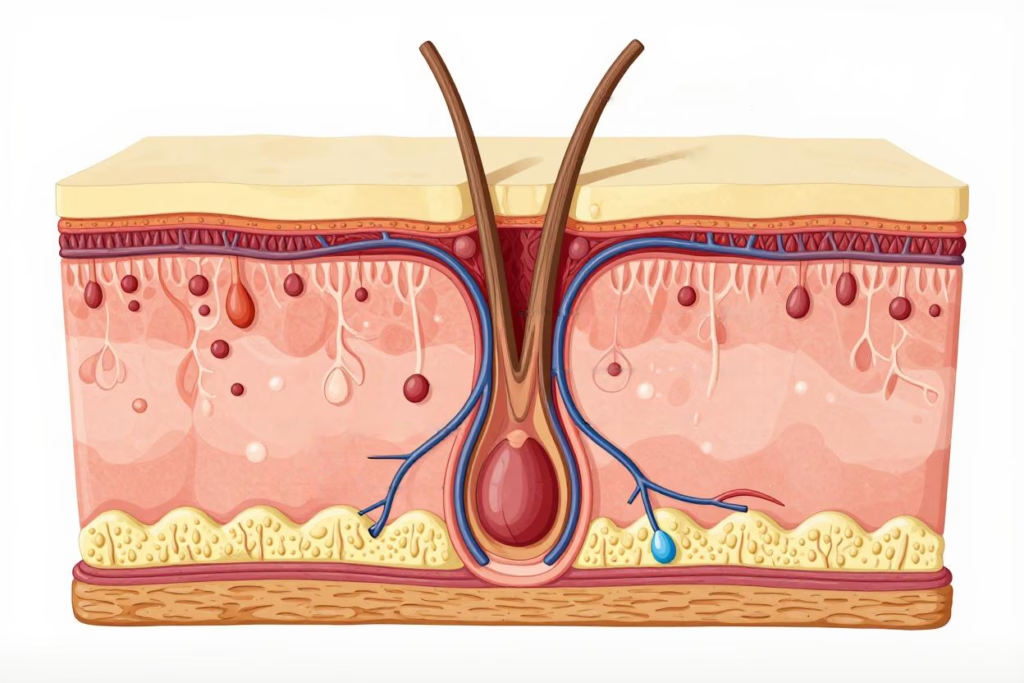
What is human skin?
To begin with, we know that the skin is our biggest organ and that it protects us in many ways:
- barrier against bacteria and germs that cause infections and illness
- protection against the elements – water, UV rays, etc.
- contains lymphoid tissue that works as part of our immune system
It also has various functions:
- provides sensitivity so that we know if something is hot or cold, itchy, painful, rough, etc.
- grows hair
- produces sweat and oils to help regulate body temperature
- produces and activates vitamin D under UV light
- connects to and cushions muscles and bones
- provides an indication of our overall health
It is made up of three layers (epidermis, dermis, hypodermis), and in one square inch, our skin has approximately 19 million skin cells.
What happens when our skin gets injured?
First stage:
First off, we start to bleed. The blood vessels at the injury site receive chemical signals that cause them to narrow, preventing too much blood loss. The chemical signals tell our spleen (a small organ just above the stomach that is part of our immune system, and where platelets are stored) to send platelets into the bloodstream. At the injury site, the blood vessel walls become sticky and capture the platelets as they float past.
The platelets change shape, become stickier, and clump together. They also release molecules into the blood that help turn on clotting factors such as fibrin, a protein that forms a sticky mesh that holds the floating platelets and other cells in place over the wound. These clots turn into scabs as they dry, protecting the wound from infectious elements in the environment and promoting healing.
Second stage:
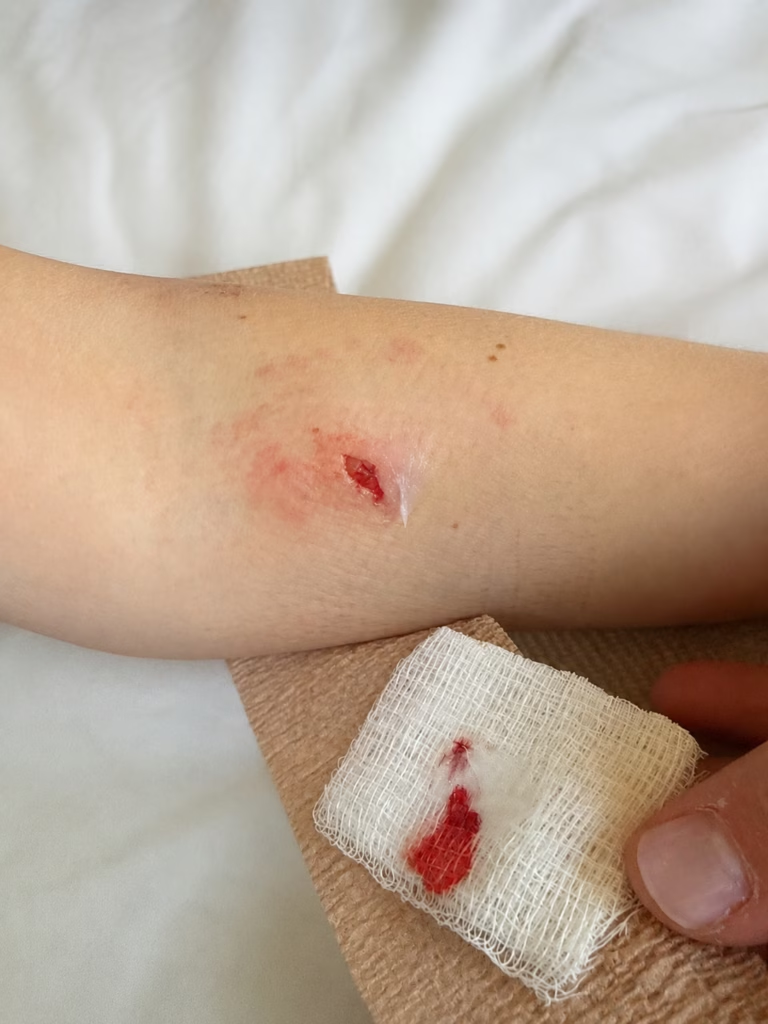
The next stage, once the wound is closed with a clot, involves getting fresh nutrients and oxygen to the area via the blood vessels and fighting infection and clearing debris. This is also the stage when the site can get a bit red, swell, or feel warm — those sensations are part of the healing process (but if they persist for too long, they can also be signs of infection, so we need to be vigilent). Macrophages, our white blood cells, kill unwanted bacteria, clear out dead cells, and prevent infection. They also release chemical messengers to help new tissues to grow. Plasma and microorganisms are released, also into the surrounding tissue, helping to prevent infection (this causes the inflammation).
Growth factors encourage cell division, helping new tissues to grow. The depth of the wound determines how well it will heal. If enough of the skin structures (hair and pigment, oil and sweat glands) survived the injury, they may regenerate. If not, the new skin may not have these features.
At the end of this second stage, macrophages help to reduce inflammation, signalling the start of the third stage.
Third stage:
During this stage of tissue replacement in the dermal layer (and subdermal layer if the wound is deep), specialized cells called fibroblasts synthesize collagen, which helps to regenerate connective tissue and gives skin its strength. The collagen serves as a type of scaffolding. Incidentally, we can sometimes observe the result of this process as a scar that starts out red and that eventually dulls.
Also during this third phase, cells from the periphery of the wound migrate over and form a thin layer of skin cells, which thickens and bridges the entire wound over time. New blood vessels form. The wound begins to contract (called contracture), starting at the edges, pulling the surface of the skin together to close the wound. This stage is when a scab may form and when it falls off.
When a wound happens over a joint or a mobile part of our body (neck, shoulder, hand, elbows, knees, etc.), this process of contracting can make it difficult or painful to move.
This stage may last from several days to a few weeks, depending on the wound’s depth and size. Healing takes place from the bottom up and from the edges inward.
Fourth stage:
This is when the body strengthens the new tissue, and this can take a few months to years. The density of the newly formed capillaries returns to normal as the excess capillaries needed for the previous phases regress, and the general architecture of the new skin approaches that of normal tissue. To note, however, the new skin will only have 70% to 80% of its pre-injury tensile strength (i.e. maximum stretching it can withstand without breaking). Contracture happens even more during this phase as scar tissue forms. Scar tissue can become thicker or fade over time.
Signs of healing
Healing happens in a highly synchronized fashion and there may be overlap in the phases, depending on how wide and deep the injury is. The healing timeframe can also depend on many factors: the person’s general health and nutrition, age, diabetes or other illnesses, stress, medications, smoking, dehydration, re-injury (i.e. scab removed prematurely), infection, location of the wound, etc.
As a skin wound heals, however, we generally experience:
- Reduction in pain and swelling
- A scab forming
- New pink skin that forms under the scab or along the edges
- Reduction in fluid discharge
- New skin becomes more flexible and stronger
If a wound presents other symptoms, doesn’t feel right, or doesn’t heal within a reasonable timeframe, one should seek medical attention. Getting care early can mean better possibilities for intervention and better results than waiting too long.
Image credit: Roger Brown on Pexels
Given this information, what is the best way to take care of a skin wound?
After the injury, wash your hands and clean the wound. If needed, reduce the bleeding by keeping the wound elevated and applying gentle, steady pressure with a sterile gauze. Running water and a mild soap work well and the idea is to remove visible debris and prevent infection.
A thin layer of antibiotic ointment can then be applied. Then, use a breathable dressing or a bandage and change it daily. Applying a thin layer of petroleum jelly on the wound will help to keep the wound moist.
Check the wound daily and watch for signs of infection — increasing redness, warmth around the wound, pus, pain that worsens, fever, or red streaks/lines extending from the wound. Seek medical attention if these signs are present.
Avoid constant contact with water (ie bathing or swimming) until the wound is healed. As well, try not to scratch it despite the itchiness or prematurely remove the scab so that the wound isn’t re-opened.
To note, we may need to be patient as muscles recover from soreness and/or bruises are repaired as well.
After the wound has healed, apply sunscreen (SPF 30+) to it as that may help reduce discoloration and encourage the scar to fade faster.
Is there any way to prevent unsightly scars?
Some people use vitamin E or products containing vitamin E to reduce scarring, but it is not backed by scientific research. If there is any reaction to such products, especially if they are applied before the wound has completely healed, is any adverse reactions. In that case, stop using the products and seek medical attention as needed.
The American Academy of Dermatology Association provides guidance on their website for treating scars and stretch marks. Please refer to the last website link under References & Resources below.
Finally, an amazing skin healing story
Seven-year-old Hassan was admitted to the Burn Unit of the Children’s Hospital in Bochum, Germany. Suffering from a genetic disease called epidermolysis bullosa (EB) where the top layer of skin is unable to anchor to inner layers, his body would repeatedly develop blisters all over. When Hassan was admitted to hospital, he had lost skin on about 80% of his body and was battling severe infections.
Researchers at the University of Modena and Reggio Emilia in Italy had been doing work on the type of gene mutation that caused Hassan’s condition and they had a potential treatment.
They took about half an inch square of his skin, and in the laboratory, used a retrovirus to insert a normal version of the defective gene into the skin cells. This meant that the normal gene was incorporated into the skin cells’ genome and the skin cells treated the normal gene as part of its own genome.
Then the researchers used the stem cells in the skin to grow large sheets of skin, ranging in size from about 20 to 60 square inches. In three operations, they used those sheets to replace Hassan’s damaged skin. His body reacted positively to the new skin and per the researchers, it is “stable and robust, and does not blister, itch, or require ointment or medications.”
Hassan is able to lead a normal life.
If you’re interested in tips on having good fall skin, take a look at another of our blog posts: https://thepharmacyatwellington.com/get-your-best-skin-this-fall/
Or if you’re interested in keeping your baby’s skin soft: https://thepharmacyatwellington.com/soft-as-baby-skin/
References and Resources:
Cleveland Clinic on skin – https://my.clevelandclinic.org/health/body/10978-skin
American National Library of Medicine on the anatomy of skin – https://www.ncbi.nlm.nih.gov/books/NBK470464/
Harvard Health on applying direct pressure to stop bleeding (in the case of a deep wound, one that is bleeding heavily, or one that may not stop bleeding) – https://www.health.harvard.edu/healthy-aging-and-longevity/emergencies-and-first-aid-direct-pressure-to-stop-bleeding
Cleveland Clinic on the spleen – https://my.clevelandclinic.org/health/body/21567-spleen
Cleveland Clinic on fibrin – https://my.clevelandclinic.org/health/body/fibrin
American National Heart, Lung, and Blood Institute on blood clots – https://www.nhlbi.nih.gov/health/clotting-disorders/how-blood-clots
Oslo University Hospital discovery about skin self-repair – https://ous-research.no/home/ous/news/23044
Cleveland Clinic on scars – https://my.clevelandclinic.org/health/diseases/11030-scars
MDPI on the skin wound healing process and emerging technologies – https://www.mdpi.com/1999-4923/12/8/735
University of Florida Health on skin and wound healing – https://ufhealth.org/conditions-and-treatments/skin-and-wound-healing
Wounds Canada on skin healing – https://www.woundscanada.ca/patient-or-caregiver/preventing-and-managing-wounds/basic-skin-physiology
American National Library of Medicine on factors affecting wound healing – https://pmc.ncbi.nlm.nih.gov/articles/PMC2903966/
American National Library of Medicine on wound healing phases – https://www.ncbi.nlm.nih.gov/books/NBK470443/
St. Jude Children’s Research Hospital on delayed wound healing – https://together.stjude.org/en-us/treatment-tests-procedures/symptoms-side-effects/delayed-wound-healing.html
Wikipedia on retrovirus – https://en.wikipedia.org/wiki/Retrovirus
Johns Hopkins Medicine on how wounds heal – https://www.hopkinsmedicine.org/health/treatment-tests-and-therapies/how-wounds-heal
The Stem Cellar, blog of the California Institute for Regenerative Medicine on a case of epidermolysis bullosa – https://blog.cirm.ca.gov/research-and-science/stem-cell-research/how-a-tiny-patch-of-skin-helped-researchers-save-the-life-of-a-young-boy-battling-a-deadly-disease/
American Academy of Dermatology Association on scars and stretch marks – https://www.aad.org/public/cosmetic/scars-stretch-marks